A Performance Drop Is Not the Same as a Lost Adaptation
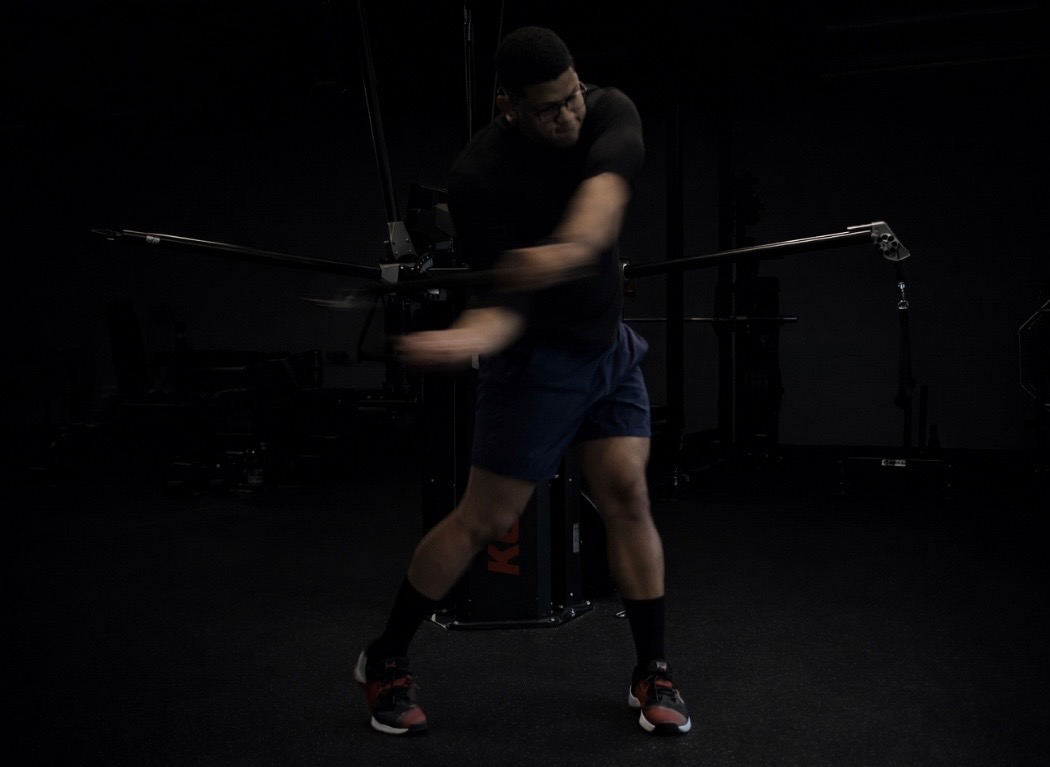
Temporary declines in athletic performance are a normal part of training and competition.
The harder question is what the decline actually means:
• A lower jump
• A slower sprint
• A missed lift
• A reduction in power
• A drop in velocity
Each of those tells us that performance changed, but none of them tells us why alone.
That's important because athletic performance naturally fluctuates from session to session and competition to competition. Even elite athletes show measurable within-athlete variability, with the magnitude differing by sport and task. In explosive sports such as weightlifting and field events, within-athlete variability can be larger than in many sprint and endurance events because skill and technical execution contribute more heavily to the result (Malcata & Hopkins, 2014). PubMed
So when performance drops, the coach is not simply asking:
• “Did the athlete get worse?”
The more useful question is:
• “What kind of change am I actually looking at?”
A lower number can mean very different things
A temporary decline might reflect:
• accumulated training fatigue
• inadequate recovery
• normal measurement or biological variation
• technical disruption
• psychological or contextual stress
• a mismatch between current readiness and the task
• or a genuine deterioration in the quality being trained
Those possibilities require very different responses.
Halson (2014) noted that there is no single definitive marker of fatigue and emphasized the importance of combining multiple sources of information when interpreting athlete state. External workload, internal response, neuromuscular function, sleep, subjective measures, and other contextual variables can all contribute to understanding what is happening. PubMed
That makes interpretation difficult because the coach may have plenty of data and still be uncertain about the next decision.
Monitoring is not the same as interpretation
Modern performance environments are increasingly capable of measuring what an athlete did:
• Timing gates can show sprint times.
• Force plates can quantify jump characteristics.
• Velocity devices can measure bar speed.
• GPS systems can describe running exposure.
• Video can show technical changes.
• Wearables can provide recovery or physiological information.
The problem is that more measurement does not automatically create a clearer coaching decision.
Gabbett and colleagues (2017) described athlete monitoring as a cycle in which workload, athlete response, well-being, and readiness should be interpreted together before deciding what intervention is appropriate. They also emphasized that lower readiness does not automatically mean the athlete simply needs more recovery; interpretation should drive the response. PubMed
More recent work has reinforced the same general problem.
Rebelo and colleagues (2026) distinguish isolated assessment from true monitoring, which requires repeated data collection interpreted longitudinally and in context. They argue that short-term readiness signals are most useful when understood relative to longer-term training effects rather than treated as standalone answers (Rebelo et al., 2026). Springer Link
Likewise, Mănescu and colleagues (2026) note that athlete monitoring can quantify training exposure and athlete status in increasing detail, while the conversion of that information into daily training decisions remains inconsistent. MDPI
That is the gap I am most interested in.
The real coaching question is what happens next
Imagine an athlete posts a sprint time that is slower than the previous week:
• One response is to assume fatigue and reduce training.
• Another is to assume the athlete has regressed and change the program.
• A third is to continue unchanged because the coach believes it is normal variation.
Any of those responses could be correct.
The difficult part is determining which explanation is most plausible given the athlete’s recent history and context.
That is why a single performance result has limited meaning on its own.
The value increases when we can ask:
• What was established previously?
• Has the quality been reproducible?
• Has it held under increasing or changing demands?
• Is the current decline isolated or becoming a pattern?
• What happens when the athlete is exposed again?
Those questions shift monitoring away from simply detecting a drop and toward understanding the athlete’s developmental trajectory.
Temporary decline does not automatically mean adaptation loss
This distinction has become especially important in how I think about performance durability.
An athlete should not be judged only by the highest level of performance they have produced once.
A more durable quality should remain reasonably accessible across relevant demands.
And if it temporarily declines, I want to know whether the athlete can restore it efficiently.
That is where re-attainment becomes important.
For example, an Olympic weightlifter may be able to produce a technically excellent lift under ideal conditions.
But competition asks something more demanding.
The athlete may take repeated high-percentage warm-up attempts, manage increasing psychological and physiological demand, and then still need to execute accurately when a platform attempt matters.
In golf, the expression is different.
A player may possess the speed and distance required to perform well early in a round. But competitive durability may involve moving through repeated or demanding rounds while still being able to access the necessary distance, speed, and precision later.
The sport changes, but the developmental question does not:
• Does the quality remain available when the demands surrounding it change?
And when it temporarily disappears:
• How efficiently does it return?
This is why I built Re-attainment into Evans Velo Zone®
Much of athlete monitoring understandably focuses on current performance, readiness, workload, and change over time.
I wanted Evans Velo Zone® to explicitly account for what happens after a previously established quality declines.
EVZ therefore looks at development through a longer sequence:
• Retention → Transfer → Output → Re-attainment
Retention asks whether a previously developed quality can still be reproduced.
Transfer asks whether that quality remains useful when the task or demand changes.
Output asks whether the athlete can express the quality at a higher level.
Re-attainment asks what happens after performance temporarily falls below a previously established level.
The purpose is not to label every poor performance as a failure, but to give the coach a clearer framework for deciding whether the athlete should:
• progress, hold, modify training, or reassess.
The goal is not constant peak performance
Constant improvement is not a realistic standard for athlete development:
• Training creates stress
• Competition creates stress
• Travel, sleep, life demands, technical changes, and recovery all affect how performance presents on a given day
The objective should therefore not be to eliminate every decline.
The objective is to understand which declines matter.
That requires separating three very different possibilities:
Normal variation
The athlete remains essentially stable despite a small fluctuation.
Temporary suppression
The quality is still present but is currently less accessible because of fatigue, recovery state, or context.
Meaningful regression
The previously established quality is no longer being reproduced and may require intervention or rebuilding.
Those are not the same condition and they should not automatically produce the same programming decision.
Better monitoring should lead to better decisions
Performance technology has become increasingly sophisticated, but the value of athlete monitoring ultimately depends on whether the information changes what the coach does next.
The emerging literature increasingly reflects that distinction: monitoring should support interpretation and decision-making rather than simply create more data (Rebelo et al., 2026; Mănescu et al., 2026). Springer Link
That is the problem I believe performance technology now has to solve more consistently.
Performance tools show us what happened.
The next frontier is helping coaches determine:
• What does it mean?
• Is it meaningful?
• And what should happen next?
That is the question Evans Velo Zone® was built around.
For Coaches
The next time an athlete’s performance drops, instead of immediately asking whether the program needs to change, consider asking:
• Is this ordinary variation, temporary fatigue, or evidence that the underlying quality has actually changed?
Then look at what happens next.
That next response may tell you more than the decline itself.
References
Bourdon, P. C., Cardinale, M., Murray, A., Gastin, P., Kellmann, M., Varley, M. C., Gabbett, T. J., Coutts, A. J., Burgess, D. J., Gregson, W., & Cable, N. T. (2017). Monitoring athlete training loads: Consensus statement. International Journal of Sports Physiology and Performance, 12(Suppl 2), S2-161–S2-170. PubMed
Gabbett, T. J., Nassis, G. P., Oetter, E., Pretorius, J., Johnston, N., Medina, D., Rodas, G., Myslinski, T., Howells, D., Beard, A., & Ryan, A. (2017). The athlete monitoring cycle: A practical guide to interpreting and applying training monitoring data. British Journal of Sports Medicine, 51(20), 1451–1452. https://doi.org/10.1136/bjsports-2016-097298. United Arab Emirates University
Halson, S. L. (2014). Monitoring training load to understand fatigue in athletes. Sports Medicine, 44(Suppl 2), S139–S147. https://doi.org/10.1007/s40279-014-0253-z. PubMed
Malcata, R. M., & Hopkins, W. G. (2014). Variability of competitive performance of elite athletes: A systematic review. Sports Medicine, 44(12), 1763–1774. https://doi.org/10.1007/s40279-014-0239-x. PubMed
Mănescu, D. C., Filip, C., Nae, C. I., & Ciomag, R. V. (2026). Optimizing athletic performance: A systems framework for adaptive training, load management, and decision-making. Journal of Functional Morphology and Kinesiology, 11(3), 245. https://doi.org/10.3390/jfmk11030245. PubMed
Rebelo, A., Bishop, C., Thorpe, R. T., Turner, A. N., & Gabbett, T. J. (2026). Monitoring training effects in athletes: A multidimensional framework for decision-making. Sports Medicine, 56, 1603–1624. https://doi.org/10.1007/s40279-026-02417-4. PubMed