Predictable Performance: How Developmental Priorities Produced a 6/6 Competition Result
Predictable Performance Begins with Output Retention
Personal records are exciting.
Predictable performance is more valuable.
Peak performance demonstrates what an athlete can produce. But competition also requires athletes to repeatedly access established performance under changing demands, pressure, and uncertainty.
This is one of the developmental questions explored within the Evans Velo Zone™ (EVZ™) methodology.
EVZ organizes athlete development through:
Retention → Transfer → Output → Re-attainment
Within that progression, Retention establishes whether performance is sufficiently stable and repeatable to support what comes next.
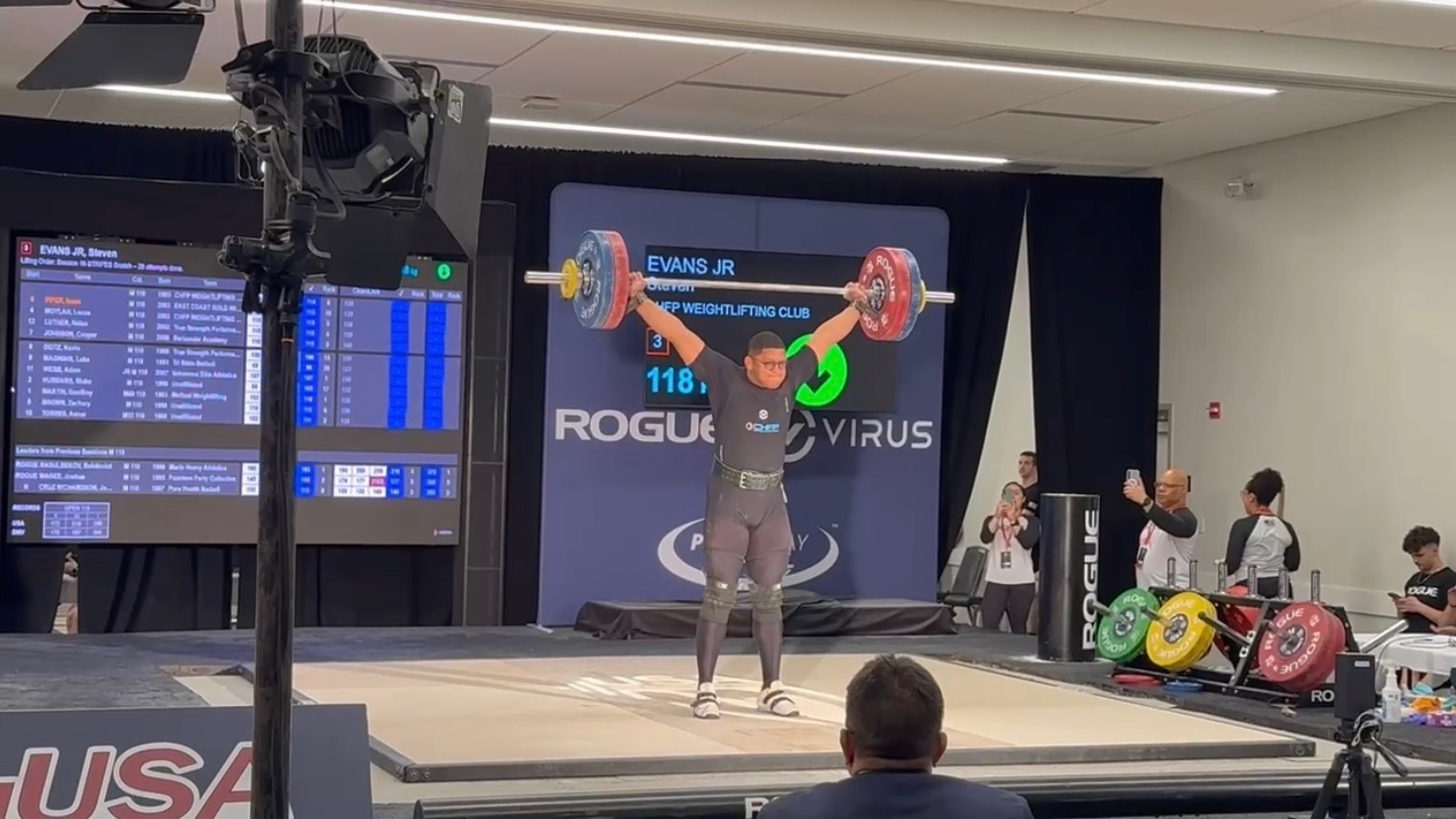
My performance at the 2026 Virus Weightlifting Series I National Championship provided a practical example of that principle.
A Competition That Followed the Plan
At the 2026 Virus Weightlifting Series I National Championship, I finished the day six for six.
Along the way, I established new competition personal records:
Snatch: 118 kg
Clean & Jerk: 140 kg
The numbers were meaningful.
What mattered more was how expected they felt.
The competition unfolded almost exactly as training suggested it would.
There were no dramatic swings in performance. No unexpected technical breakdowns. No need to discover performance on competition day.
The outcome reflected a training process built around repeated high-quality exposures rather than isolated peak performances.
That distinction has become an important part of how I think about athlete development.
Why Olympic Weightlifting Reveals Performance Clearly
Olympic weightlifting provides a particularly clear environment for evaluating repeated performance.
Every successful lift requires:
- Explosive output
- Technical precision
- Timing
- Coordination under pressure
The outcome is objective.
The lift is either completed or it is not.
Because the margin for error is small, weightlifting quickly exposes whether high-level performance is becoming repeatable or whether it depends on isolated moments of exceptional execution.
The Difference Wasn’t the PR
Throughout the training cycle, I was not chasing one perfect lift.
The objective was different.
The priority was repeatedly expressing heavy lifts with consistent execution.
Multiple exposures above 90% became increasingly routine.
The lifts remained technically stable.
Heavy attempts became familiar rather than unusually stressful.
Those sessions built confidence because they demonstrated something more useful than isolated capacity.
They demonstrated reliability.
Repeated Performance Creates Confidence
Competition introduces pressures and conditions that training cannot perfectly reproduce.
But athletes can prepare by making the underlying performance increasingly familiar and repeatable.
When repeated high-level performance becomes normal during training, competition becomes less about hoping capability appears and more about expressing performance that has already been established.
That can reduce uncertainty.
The athlete has accumulated evidence that the performance is available.
Measuring What Matters
Within EVZ, repeated-performance behavior can be quantified using the Retainable Power Index (RPI™).
RPI measures how well demonstrated performance is retained across repeated exposures relative to a reference output.
Depending on the training environment, EVZ can capture evidence through:
- Structured observation
- Objective performance technology
- A hybrid of both
RPI can provide a standardized signal related to performance retention and stability, but the number is not interpreted in isolation.
Developmental phase, session structure, technical execution, training context, and longitudinal trends all contribute to its meaning.
RPI provides the signal. EVZ provides the developmental context.
One Moment That Reinforced the Principle
During the competition, the timing between attempts became unusually long because of athlete changes.
To maintain readiness, my coach had me perform 110 kg—approximately 90% of my best snatch—three separate times in the warm-up area between competition attempts.
Those lifts were not intended to create adaptation.
They were intended to keep established performance available.
Because repeated heavy exposures had become a consistent part of training, these additional lifts did not feel foreign.
They provided a practical example of established performance remaining available across repeated high-intensity exposures.
Training had prepared me not only to lift heavy once, but to repeatedly access heavy performance when competition required it.
Beyond Olympic Weightlifting
Although Olympic weightlifting played an important role in the development of EVZ, the underlying developmental questions extend well beyond the sport.
Whether the performance quality is:
- Clubhead speed
- Sprint acceleration
- Throwing velocity
- Jump performance
- Rotational power
- Change of direction
- Strength or power expression
the coach still has to ask:
Can the athlete reproduce established performance?
Can it remain available as demands change?
Can greater output be developed?
Can previously established output be re-attained?
The sport changes.
The developmental questions remain.
What Coaches Should Take Away
Developing exceptional performance remains important.
But coaches should also consider what happens after that performance has been established.
Can it be repeated?
Can it remain available as demands change?
Can greater output be developed?
Can previously established performance be re-attained?
These questions correspond with the EVZ developmental phases:
Retention → Transfer → Output → Re-attainment
Repeated and longitudinal evidence can help coaches understand performance durability, identify developmental priorities, and evaluate whether training decisions are producing the intended response.
Peak testing still matters.
It simply does not tell the whole story by itself.
The EVZ Perspective
Evans Velo Zone™ does not treat peak output and repeatability as competing ideas.
Peak performance establishes what an athlete can produce.
Retention provides evidence of how consistently established performance remains available.
Transfer examines what happens as demands change.
Output focuses on developing greater repeatable performance.
Re-attainment examines whether previously established output can be restored after strategic reduction or disruption.
Together, these phases create a broader developmental view of athletic performance.
The objective is not simply to chase a higher number.
It is to understand how performance behaves, how it develops, and whether it remains available when it matters.
Evidence, Not Proof
One successful competition does not validate an entire methodology.
Nor can a single performance establish causation between a training process and a competition outcome.
What it can provide is another piece of evidence.
In this case, going six for six and establishing competition personal records was consistent with what repeated training exposures had suggested: the performance developed during preparation remained accessible under competition conditions.
That mattered more to me than the personal records alone.
The objective was not simply to produce higher output.
It was to develop performance that could be relied upon when it mattered.