When Athletes Fade (And Why Everyone Explains It Differently)
Why Athletes Fade (and Why Everyone Explains It Differently)
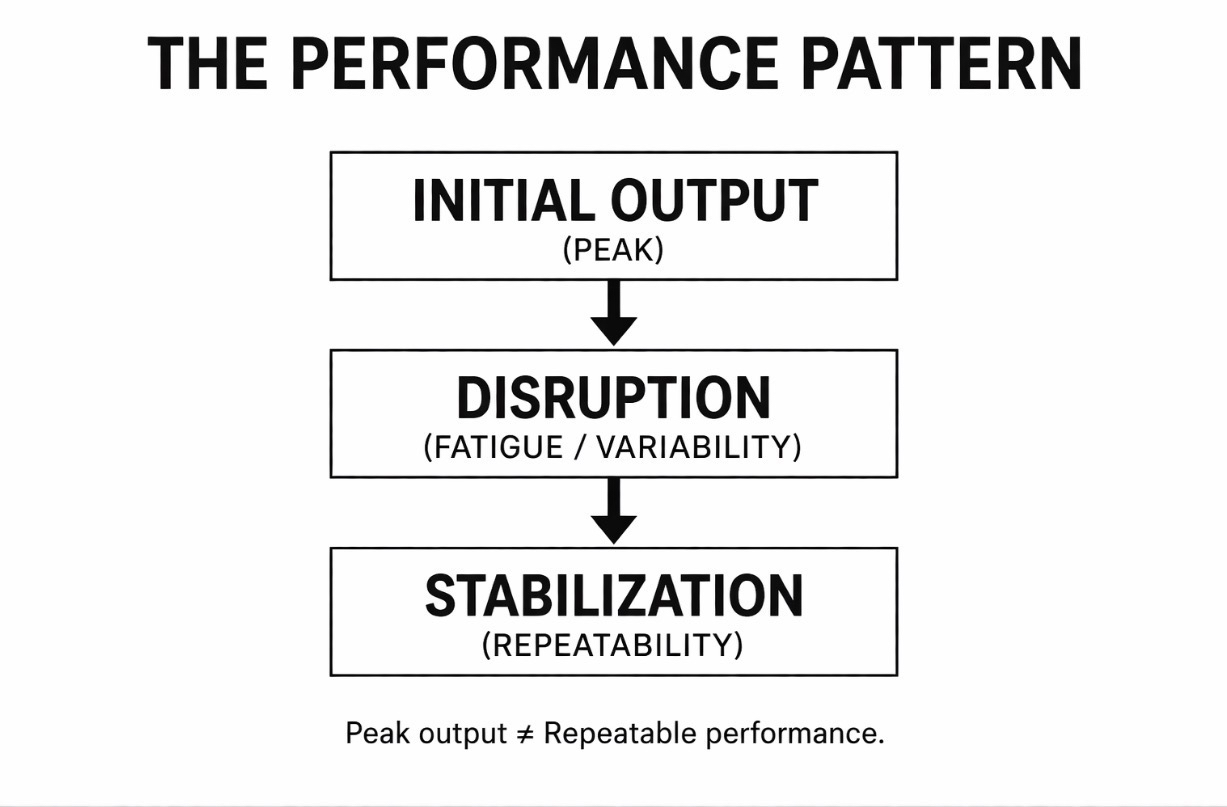
Athletes often look their best early.
Speed is high. Timing is sharp. Movement is coordinated.
As demands continue, performance may begin to change:
• Output drops
• Technique becomes less consistent
• Timing deteriorates
• Variability increases
Ask different coaches why, and you may hear different explanations:
Fatigue. Technique. Psychology. Recovery. Energy systems.
Each may be relevant.
But EVZ™ asks a different question:
What is happening to performance as the demands continue?
Similar Demands. Different Responses.
Two athletes can face similar conditions and show very different performance behavior.
One remains stable.
The other begins to lose output, coordination, or consistency.
The important distinction is not always simply how much fatigue exists.
It is how the athlete’s performance responds to the demand.
Performance Is a Pattern
A single effort cannot show the full picture.
Across repeated or changing exposures, coaches can observe:
• Performance stability
• Output variability
• Technical consistency
• Breakdown points
• Recovery or re-attainment
• Changes across time
These patterns provide context that peak values alone cannot.
Why Everyone Explains the Fade Differently
Performance breakdown can have many contributors.
Fatigue may be involved.
Technique may change.
Psychological pressure may matter.
Recovery may be insufficient.
The EVZ framework does not attempt to replace those explanations.
Instead, it gives coaches a structured way to evaluate how those influences ultimately appear in performance.
The EVZ Perspective
EVZ organizes developmental interpretation through:
Retention → Transfer → Output → Re-attainment
Depending on the pattern, a coach may need to determine whether the athlete should:
• establish greater repeatability
• improve performance across changing demands
• develop higher output
• restore previously established performance
Evidence can come from:
Observation | Technology | Hybrid
RPI™ can provide a retention/repeatability signal where appropriate, while EVZ Wave™ can help identify where performance changes across progressive and repeated demands.
Why This Matters
The goal is not to reduce every decline to one explanation.
It is to recognize when performance begins to change, how it changes, and what should be developed next.
Because athletes do not always separate simply by who has the highest peak.
They also separate by how their performance behaves when the demands continue.