Power Durability Framework Series: Part 4

How to Spot a Retention Problem in 3 Sets – Before It Costs Performance

The Difference Between Coaching Output and Measuring It

Many coaches assume retention problems show up months later, while they can actually show up in three sets — if you know what you’re looking for.

This requires something most systems can’t provide: Coaching competence, instead of just data.

Distinguishing Output from Durability

A first set may look explosive – high numbers, sharp execution, strong capactiy.

Capacity confirms that power exists. Durability reveals how well it sustains under changing demands.

Peak output shows you expression and average output shows you consistency inside a controlled window.

Retention analysis shows how output behaves when the environment shifts.

Where Skilled Coaches See It First

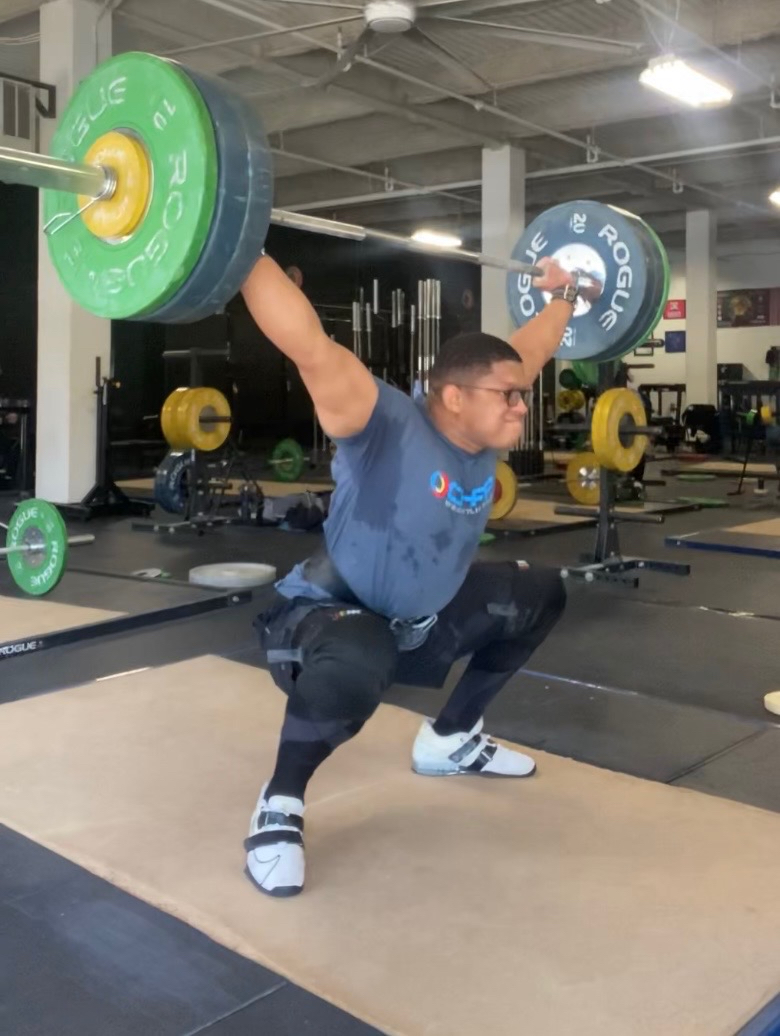
Before I formalized the Evans Velo Zone™ framework, I saw this repeatedly in Olympic lifters and athletes from various sports.

They had strong first attempts with sharp technique and good numbers, but under fatigue or wave progression, subtle behavioral drift would appear:


• Slight positional loss

• Delayed force entry
• Inconsistent re-expression
• Increased variability rep to rep

These athletes were strong elsewhere, but I was able to observe that they were losing preservation, which the data eventually confirmed as well.

The 3-Set Screen

Complex testing protocols aren't necessary to suspect a retention issue, but there must be structured intent and disciplined observation.

Why Many Athletes Leak Performance Between Sets

Set 1 — Capacity

• Output expression is high

• Durability is not being diagnosed just yet

• We are seeking confirmation that power exists

Many programs will stop here and miss valuable insights.

Set 2 — Controlled Stress

• Slight load increase
• Reduced rest time
• Repeat training demand

Now watch for:


• Behavioral inconsistency
• Output drop-off patterns
• Technical drift under effort
• Delayed reset between reps

If output declines disproportionately to demand shift, you may be seeing a retention issue.

A spreadsheet will show decay, but an experienced coach sees pattern change.

Set 3 — Re-Expression

This is where retention will be exposed.

Can the athlete:


• Reproduce power quality after stress?
• Maintain directional integrity?
• Stabilize output across reps?

Or do you observe:


• One strong rep followed by power collapse?
• Artificial compensation?
• Increased disruption in movement pattern?

That is not a strength problem, but a power preservation problem.

Why This Matters

When this phase is interpreted as a capacity limitation, common adjustments include:


• More load
• More volume
• More intensity

Consequently, if retention stability is the limiting factor, increasing stress may actually accelerate the athlete's breakdown rather than correct it.

Recognizing this distinction early can:

• Preserve progression
• Protect competitive reliability
• Improve long-term performance stability

The issue isn’t how much power an athlete can produce, but how reliably their power survives stress.

Data Does Not Replace Coaching

Output tools are valuable, but output without context can become misleading.

If two coaches look at the same dataset, one can decide to chase peaks while the other decides to read what the behavior is saying.

The difference boils down to interpretation and the Evans Velo Zone™ system teaches how to interpret output decay, variability, and re-expression as decision rules.

The Real Question

If one can’t identify a retention breakdown inside of three controlled exposures, how long will it take to recognize the issue and make corrections?

High-level performance doesn’t collapse overnight, it erodes quietly, rep to rep, set to set.

Athletes don't lose peak power first, they will lose retention, re-expression, and transfer ability.

If the highest number on the screen is the only metric being put on a pedestal, the leak will be missed entirely.

Peak velocity quantifies output, not performance. Transferable power defines whether that output survives stress, fatigue, and competition.

The 3 Sets Diagnostic Framework answers a critical question:

"Can the athlete reproduce high-quality output under stress – or are they borrowing from reserves they cannot sustain?"

This distinction clearly identifies the competitive reliability athletes and coaches seek.

Where I Stand

Peak power spikes observed in isolation are insufficient for telling me about power that:

• Holds across sets

• Stabilizes under fatigue

• Transfers under competition pressure

I view output without retention as volatile and power without tranferability as cosmetic.

These power performance principles apply universally – whether i'm working with an olympic weightlifter, volleyball player, golfer, or hockey athlete.

The sport, stress profile, and movement expression change – but the diagnostic question does not.

Systems must account for re-expression quality and drop-off behavior to observe output through a complete lens and to truly diagnose power performance.

The End of the Series — The Beginning of Application

Across this series, we’ve addressed:

• Why peak output alone misleads
• Why average output doesn’t equal durability
• How retention decay hides inside sets
• How load shifts expose unstable transfer

Power performance is a behavior over time.

It is how output survives fatigue, adapts to load change, and transfers across movement demands.

This lens is what evolved into the Evans Velo Zone™ framework. Not as a rejection of traditional S&C principles, but as an expansion of them.

If You’re Ready to Apply This

Understanding these patterns conceptually is one level.

Diagnosing and correcting them inside real training environments is the next.

The Evans Velo Zone™ Certification formalizes:

• How to detect retention instability
• How to interpret asymmetry beyond load
• How to structure waves for durable power
• How to turn velocity data into precise decisions

This is a new standard for measuring power performance.

If this series shifted how you see power, the next step is learning how to operationalize it.

Learn more about the Power PlayBook, Velo Zone™ App, and EVANS VELO ZONE™ Certification