PRs Can Stay Elusive in Olympic Weightlifting – Even When Strength Improves
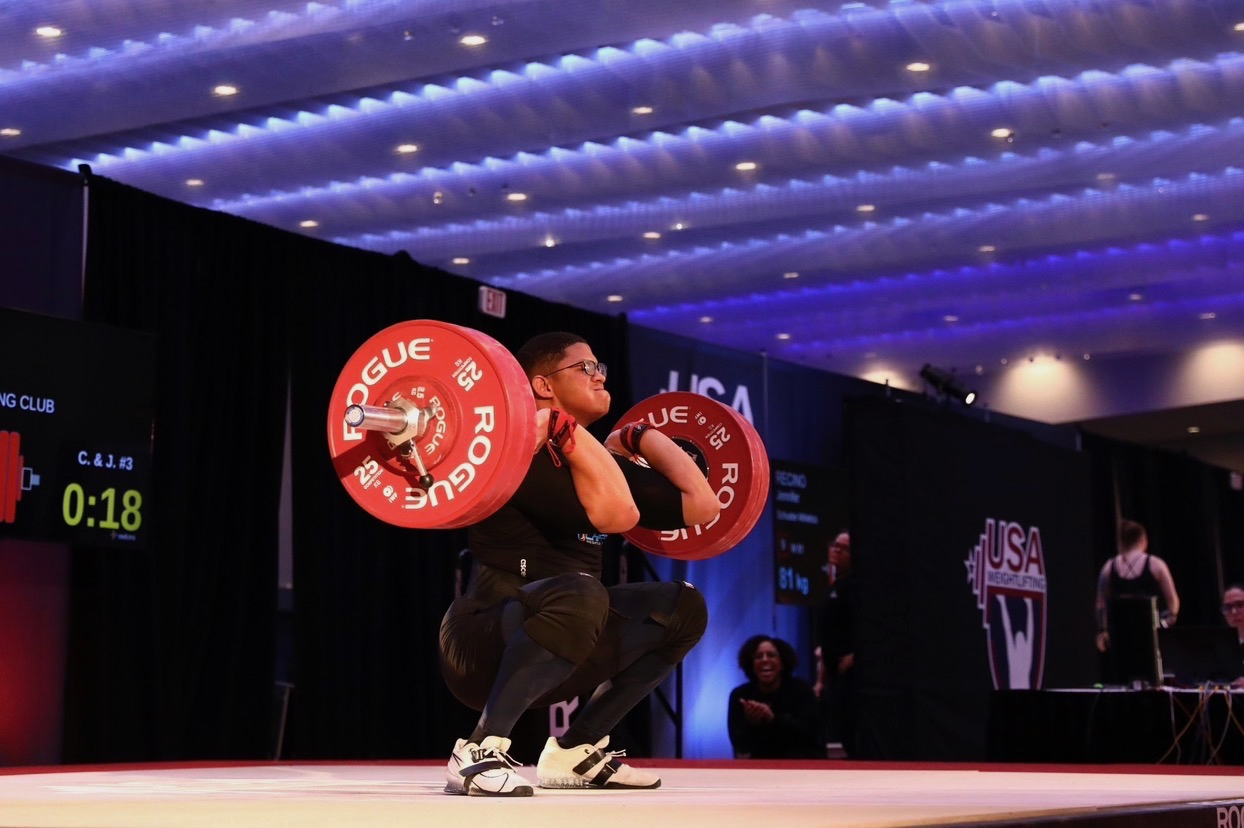
Why Olympic Weightlifting PRs Can Stay Elusive Even as Strength Improves
One of the most frustrating experiences in Olympic weightlifting is getting stronger without seeing the same progress in the competition lifts.
Back squats improve.
Front squats improve.
Pulls get heavier.
Strength work feels easier.
Yet the snatch or clean & jerk PR refuses to move.
That does not necessarily mean the strength work is failing.
It may mean the athlete has developed more capacity than they can currently express through the competition lifts.
Strength Raises the Ceiling
Strength is foundational to weightlifting performance.
A stronger athlete may have greater potential to:
• accelerate heavier loads
• maintain positions under load
• recover from cleans
• tolerate higher training demands
But strength is only one contributor to a successful maximal lift.
The competition lifts also depend on timing, positioning, coordination, commitment, and the ability to preserve those qualities as load approaches the athlete’s limit.
That creates an important distinction:
• Strength can increase before weightlifting performance catches up.
The Strength-to-Skill Gap
At submaximal loads, an athlete may have enough physical reserve to overcome small technical errors.
Near maximal loads, that margin becomes much smaller.
A slightly mistimed pull, unstable receiving position, altered bar path, or hesitant turnover can be enough to miss a lift that the athlete is physically strong enough to complete.
This is why PR plateaus can persist even while general strength numbers continue climbing.
The limiting factor may no longer be force production.
It may be the athlete’s ability to express that force through the specific coordination demands of the lift.
Look at Where the Lift Changes
When PRs stall, the useful question is not simply:
• “Do we need more strength?”
It is:
• “Where does the competition lift begin to change as load increases?”
For example:
• Does bar speed remain adequate while receiving quality deteriorates?
• Does the athlete pull the bar high enough but lose position underneath?
• Does the clean remain strong while the jerk becomes inconsistent?
• Are technically sound lifts repeatable at 85% but unpredictable above 90%?
• Can the athlete reproduce previously successful heavy attempts later in the session?
Those observations help identify whether the bottleneck is actually strength or the expression of strength.
Programming Implications
If strength continues rising while PRs remain stagnant, simply adding more strength work may not solve the problem.
The athlete may need more exposure to:
• technically precise lifts at developmentally relevant loads
• heavier competition-lift practice without excessive fatigue
• repeated successful attempts near the edge of technical stability
• targeted positional or technical work
• opportunities to re-establish confidence and consistency at previously difficult loads
The goal becomes narrowing the gap between physical capacity and competition-lift expression.
Where EVZ Fits
EVZ™ can help organize this problem without assuming that every plateau has the same cause.
Through structured Observation, Technology, or Hybrid evidence, coaches can examine how the competition lift behaves as demand changes.
The EVZ developmental model then helps frame the priority:
• Retention — Is the lift stable and repeatable?
• Transfer — Does that quality carry into heavier loads or changing demands?
• Output — Can higher performance be developed from a stable base?
• Re-attainment — Can previously established heavy performance be reproduced?
The value is not in predicting the next PR.
It is in identifying what is preventing the athlete’s existing strength from becoming a more reliable competition lift.
The Bigger Idea
Getting stronger and getting better at weightlifting are related.
They are not identical.
Strength expands what may be possible.
Technique, coordination, and reliable expression determine how much of that potential actually appears on the platform.
So when strength improves but PRs stay elusive, the answer may not be more capacity.
It may be better conversion of the capacity already there.
Build strength, refine expression, close the gap.